
How Artificial Intelligence Is Improving Colonoscopy Detection Rates
Colorectal cancer is one of the leading causes of cancer death in the United States. While rates have declined for adults over 50, they have risen steadily among adults under 50, prompting medical organizations to lower the recommended screening age to 45. This shift expands opportunities to detect cancer at more treatable stages, but even careful colonoscopies can miss early-stage lesions due to their size or location. New artificial intelligence systems are being used to improve detection by continuously monitoring for polyps during procedures and drawing attention to areas physicians might otherwise overlook.1
How Does Colorectal Cancer Develop?
To understand how AI can enhance a colonoscopy, it helps to know what gastroenterologists are looking for during these procedures. Colorectal cancer generally develops from polyps, which are small growths that form in the lining of the colon. Most polyps remain benign, but certain types can slowly develop into cancer. Adenomas, the most common precancerous polyps, typically take 10 to 15 years to become malignant. This slow progression means that finding and removing polyps during routine screening can prevent cancer from developing in the first place.
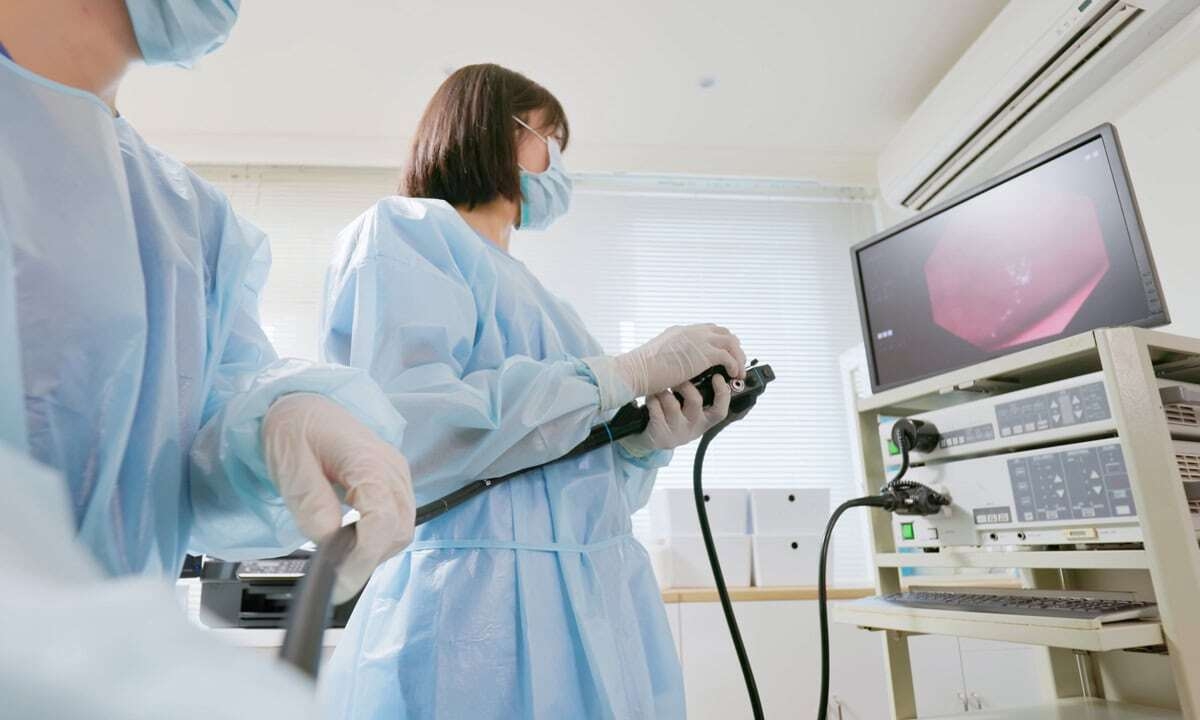
A colonoscopy detects polyps by allowing direct visualization of the colon’s interior. A gastroenterologist advances a flexible scope through the entire length of the colon, examining the tissue for any abnormal growths. When a polyp is identified, it can be removed immediately using instruments passed through the scope. This combination of detection and removal in a single procedure explains why colonoscopy has been the primary screening tool for decades and why regular screening has reduced colorectal cancer rates in older adults who undergo it consistently.
What Colonoscopy Does Well and Why Detection Still Matters
The effectiveness of colonoscopy depends entirely on the gastroenterologist’s ability to identify polyps during the examination. While the procedure provides direct access to the colon’s interior, actually detecting every polyp requires careful inspection of tissue that varies in appearance and is often folded or curved in ways that create partial obstructions. Some polyps present as obvious raised masses, but others grow flat against the colon wall or have coloring that closely resembles surrounding tissue.
Maintaining consistent detection across the entire procedure presents its own challenge. The examination requires sustained visual attention as the scope advances through roughly five feet of intestinal tissue, inspecting each section methodically before moving forward. Small variations in withdrawal speed, viewing angle, or the clarity of the bowel preparation can affect visibility. Even experienced gastroenterologists acknowledge that the thoroughness of any individual examination can vary based on procedural conditions and the inherent difficulty of maintaining perfect vigilance throughout the entire scope of the colon.
How AI Is Helping Physicians
Because colonoscopy relies on sustained visual detection under variable conditions, newer tools are being used to support that process. AI-assisted colonoscopy is designed to improve consistency during the examination by supplementing the physician’s visual assessment rather than replacing it. In practice, these systems are intended to strengthen detection in several key areas:
- Detecting flat and subtle polyps: AI can draw attention to flat polyps or growths with minimal contrast from surrounding tissue, which are among the easiest to miss during visual inspection.
- Maintaining continuous monitoring: The system monitors the visual field continuously during withdrawal, helping maintain consistent attention throughout a long and methodical examination.
- Identifying obscured areas: AI can identify suspicious regions that are partially obscured by folds or viewed at challenging angles, prompting closer inspection by the physician.
- Reducing examination variability: By applying the same visual criteria throughout the procedure, AI can help reduce variability in detection related to viewing conditions or procedural complexity.
Improvements in polyp detection during colonoscopy matter because they are closely tied to long-term cancer prevention. Gastroenterologists assess examination quality in part by adenoma detection rate, a measure of how often precancerous polyps are identified during screening. Lower detection rates are associated with a higher risk of interval cancers, which are colorectal cancers that develop between scheduled screenings, often from polyps that were present but not identified during an earlier exam.
Studies of AI-assisted colonoscopy suggest that these systems can meaningfully improve detection during routine screening. Clinical trials have shown higher adenoma detection rates when AI tools are used alongside standard colonoscopy, with the greatest gains seen in small or flat lesions that are most likely to be overlooked. Rather than representing a dramatic shift in practice, these improvements reflect incremental gains in visibility that accumulate over time as more subtle polyps are identified and removed.
Importantly, AI does not change the fundamentals of effective screening. Careful bowel preparation, thorough examination technique, and appropriate follow-up remain essential. AI assistance functions as an added layer of support during the visual inspection phase of the procedure, reinforcing detection quality without replacing clinical judgment or decision-making.
What This Means for Patients
AI-assisted colonoscopy is becoming more common as gastroenterology practices adopt the technology following FDA clearance in recent years. For patients, the experience of the procedure itself does not change. Preparation, sedation, and recovery are the same as with a standard colonoscopy, and the use of AI is not something patients typically notice during the examination. The technology operates in the background, supporting the physician during visual inspection rather than altering the procedure. The gastroenterologist remains responsible for all clinical decisions, including whether polyps are removed, biopsies are taken, and what follow-up care is recommended based on the findings.
Contact Cary Gastro for More Info About Screening
Colorectal cancer screening remains one of the most effective methods of cancer prevention, and advances in detection technology continue to improve the reliability of colonoscopy examinations. The gastroenterologists at Cary Gastroenterology follow current screening guidelines and utilize evidence-based approaches to provide thorough colorectal cancer screening. If you’re approaching age 45 or have questions about when to begin screening, our team can help determine the appropriate timing and approach for your situation. Contact us today to request an appointment.