
How Fecal Calprotectin Helps Distinguish IBS From IBD
Irritable bowel syndrome (IBS) and inflammatory bowel disease (IBD) are two of the most common problems that affect the digestive tract. Even though they are distinct conditions with well-defined clinical profiles, there is often enough overlap in how they present that telling them apart based on symptoms alone can be difficult. In light of this challenge, gastroenterologists sometimes use a noninvasive diagnostic stool test called fecal calprotectin to help distinguish between the two.
What’s the Difference Between IBS and IBD?
Although IBS and IBD can produce some of the same digestive symptoms, the two conditions affect the gastrointestinal tract in fundamentally different ways. As a disorder of gut-brain interaction, irritable bowel syndrome involves changes in how the brain and digestive tract communicate and work together to regulate bowel function. Those changes can disrupt intestinal motility, causing material to move through the bowel too quickly or too slowly and resulting in diarrhea or constipation. They can also affect how the nervous system perceives normal intestinal activity, contributing to the abdominal pain that is common with IBS.
Because these symptoms result from changes in bowel function and sensory signaling, IBS does not produce the kind of ongoing inflammation or structural injury that can occur with inflammatory bowel disease. A patient can experience recurring pain, diarrhea, or constipation even when an endoscopy or imaging test does not reveal physical damage that would account for those symptoms. This distinction becomes especially useful when comparing IBS with IBD, where inflammation can produce measurable changes in the intestinal tissue.
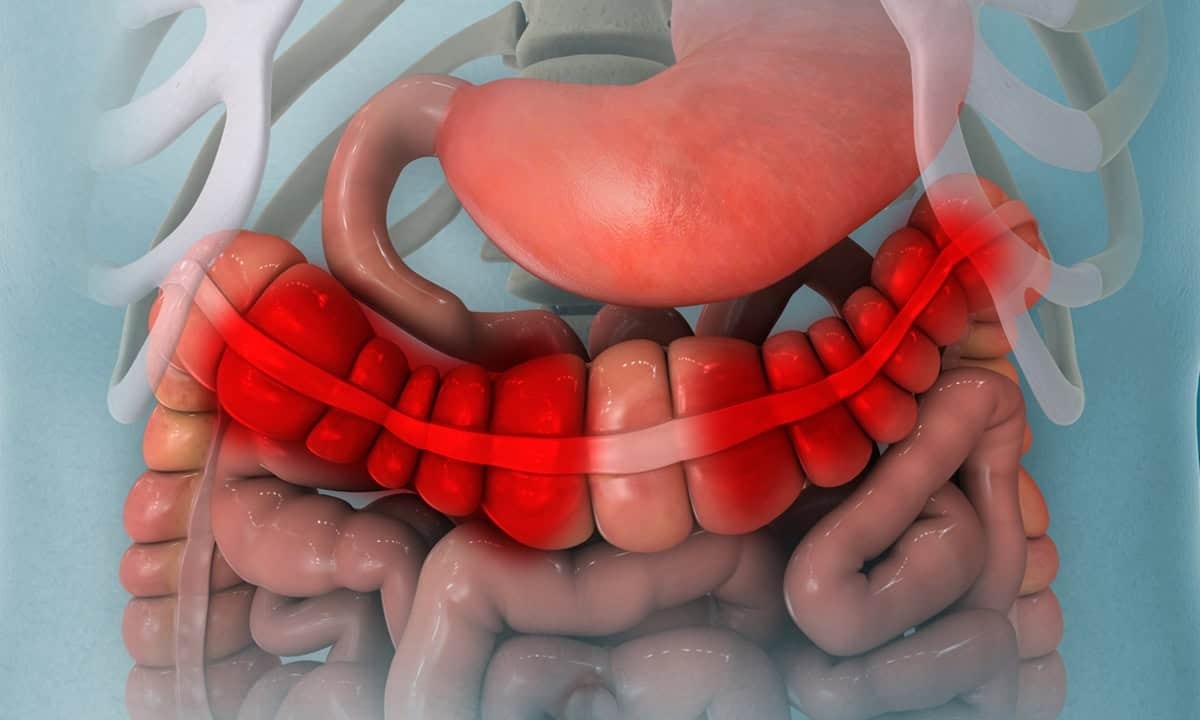
In inflammatory bowel disease, those measurable changes come from chronic inflammation caused by abnormal activity of the immune system. The two main forms are Crohn’s disease and ulcerative colitis, and they differ in where and how that inflammation develops. Ulcerative colitis is limited to the colon and rectum and primarily affects the inner lining of the bowel, while Crohn’s disease can occur anywhere along the digestive tract and may extend more deeply through the intestinal wall. Over time, this ongoing inflammation can damage tissue and lead to complications that simply are not part of IBS.
That biological difference is not always obvious from how a patient feels, however. Both conditions can cause abdominal pain and diarrhea, and the severity of those symptoms does not necessarily reveal whether inflammation is present. Someone with IBS can have intense and disruptive symptoms without any tissue damage, while a person with IBD may initially have symptoms that seem comparatively modest. This is why distinguishing between the two often requires looking beyond the symptoms themselves and determining whether there is evidence of inflammation in the bowel.1
Fecal Calprotectin and Inflammation
Doctors have several ways to look for inflammation, but some are either too broad or more invasive than necessary for an initial evaluation. A colonoscopy, for instance, allows direct examination of the intestinal lining and can be an important part of diagnosing IBD, but the procedure involves substantial preparation and can be daunting for the patient. Blood tests, by contrast, might indicate inflammatory activity more generally but can’t pinpoint the intestines as the source. A fecal calprotectin test provides another way to look specifically for signs of intestinal inflammation.
The test involves analyzing a small stool sample for calprotectin, a protein found in high concentrations inside a type of white blood cell called a neutrophil. When inflammation develops in the intestinal lining, the immune system sends neutrophils into the affected tissue, where calprotectin is released and eventually makes its way into the stool. Measuring how much is present gives a gastroenterologist an indication of inflammatory activity within the intestines. In general, a low concentration suggests that active inflammation is unlikely, while a higher concentration provides stronger evidence that inflammation may be present.
For a doctor deciding between a diagnosis of IBS or IBD, the fecal calprotectin test is a useful tool that helps answer the basic question of whether inflammation is involved. Symptoms like abdominal pain or diarrhea can occur with either condition, but evidence of intestinal inflammation changes how those symptoms are interpreted. An elevated calprotectin level can point away from IBS and increase concern for IBD or another inflammatory condition. So while the test result itself isn’t enough for a diagnosis, it can provide clarity about one of the most important differences between the two.2
How Are IBS and IBD Treated?
That additional clarity helps determine which problem treatment actually needs to address. Fecal calprotectin cannot establish an IBS or IBD diagnosis on its own, so doctors still consider the complete symptom pattern and use additional testing when necessary. Once the evidence points with reasonable confidence toward one condition or the other, however, the treatment paths begin to separate because IBS and IBD involve different underlying processes.
For IBS, treatment generally focuses on improving bowel function and reducing the symptoms created by altered motility and gut sensitivity. The specific approach depends heavily on whether diarrhea, constipation, abdominal pain, or a combination of symptoms is most prominent. Dietary changes may help identify foods that trigger symptoms, while medications can be used to regulate bowel movements or reduce intestinal discomfort. Because gut-brain signaling is also part of the condition, some patients benefit from therapies that address the way the nervous system processes digestive sensations.
Treatment for IBD has an additional objective because the inflammation itself can damage intestinal tissue. Medications are used to suppress or modify the inflammatory immune response, with the specific treatment depending on whether the patient has Crohn’s disease or ulcerative colitis and how active the disease is. Some patients may eventually require surgery when inflammation causes complications or cannot be adequately controlled with medication. In either case, controlling symptoms matters, but treatment also aims to reduce the underlying inflammation and allow affected tissue to heal.
Contact a Gastroenterologist
When recurring abdominal pain, diarrhea, constipation, or other digestive symptoms make the cause unclear, a gastroenterology evaluation can help determine what is happening and what kind of treatment is appropriate. The gastroenterologists at Cary Gastro evaluate conditions such as IBS and IBD and use tests like fecal calprotectin, colonoscopy, and other diagnostic tools when needed to distinguish between them. Contact Cary Gastro today to request an appointment and get started with an evaluation of your symptoms.
1https://pubmed.ncbi.nlm.nih.gov/33315591/
2https://pubmed.ncbi.nlm.nih.gov/37823411/